Innovation-TL

  • The institution provides spacious, thoughtfully designed lecture halls along with fully equipped, modern smart classrooms.
  • Lectures are conducted using a green board and chalk to clearly explain theoretical concepts.
  • Smart TV boards installed in every classroom help faculty members conduct interactive lectures and effective demonstrations.
  • Faculty members interact with students by posing spontaneous questions, enabling them to clear their doubts instantly.
  • To maintain high standards, clear communication is ensured, and insightful, thought-provoking ideas are shared with all students.
  • Classroom sessions include discussions of tests as well as question papers from previous university examinations.
  • Course instructors ask questions to promote active student participation, and learners are motivated to raise their own questions to clear any doubts.
Faculty members teaching related subjects are appointed as Content Creators to ensure academic consistency and depth in course delivery. In each department, one faculty member is designated as the Course Coordinator and another as the Course Moderator, responsible for overseeing course content and maintaining the quality standards of Continuous Assessment Test (CAT) question papers. This process includes systematic verification of Course Outcomes (COs) and ensuring proper alignment with Bloom’s Taxonomy levels to uphold academic rigor and outcome-based education practices.

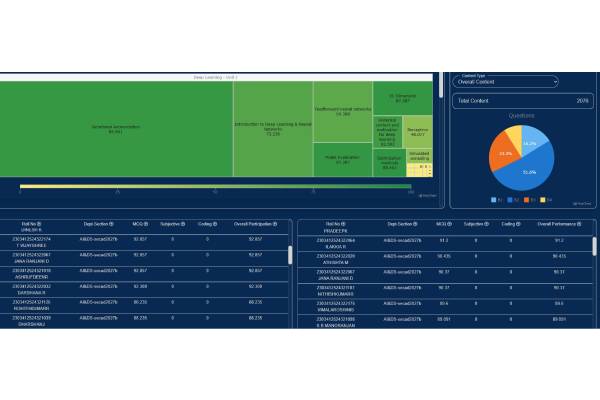
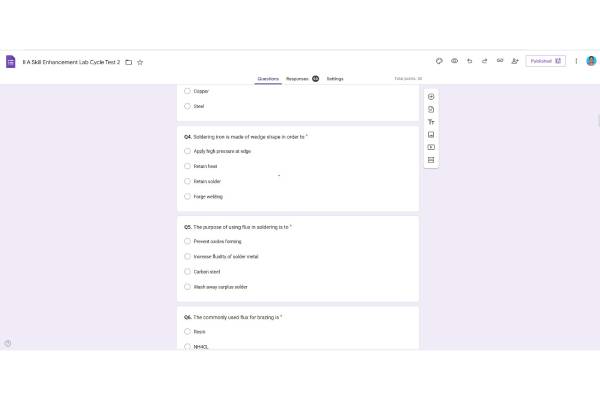
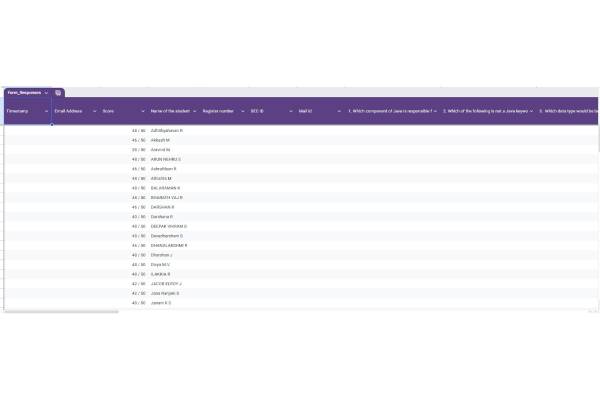
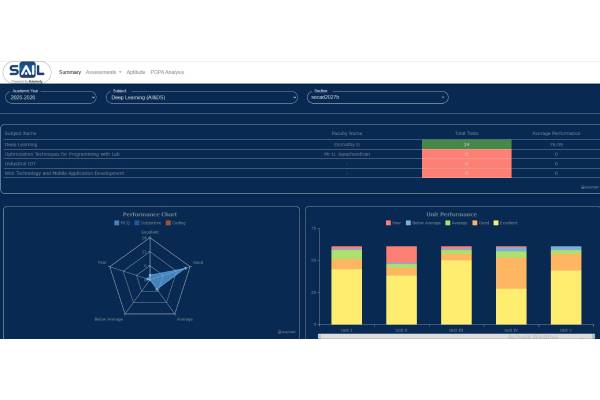
SAIL is a dedicated AI-enabled platform developed by Sairam Institutions to assess and enhance students’ higher-order thinking skills. It employs three distinct assessment methodologies—Subjective Assessments, Objective Assessments, and Coding Assessments—functioning as direct measures for evaluating Course Outcome (CO) attainment.The institution provides a fully Wi-Fi-enabled campus, promoting a dynamic e-learning environment where faculty and students actively engage in discussions related to objective assignments. These assessments are conducted through digital tools such as Google Forms and the dedicated SAIL App, ensuring seamless accessibility, interactive learning, and effective evaluation aligned with outcome-based education standards.
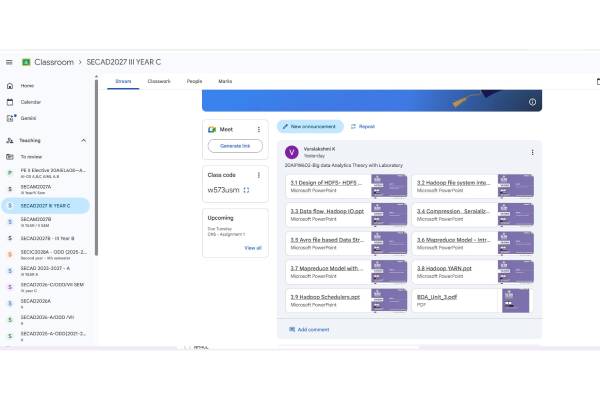
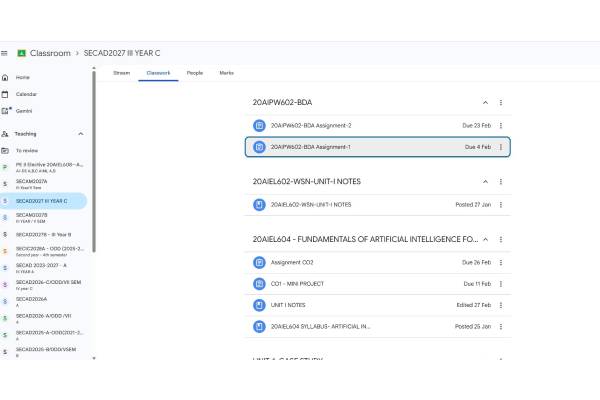
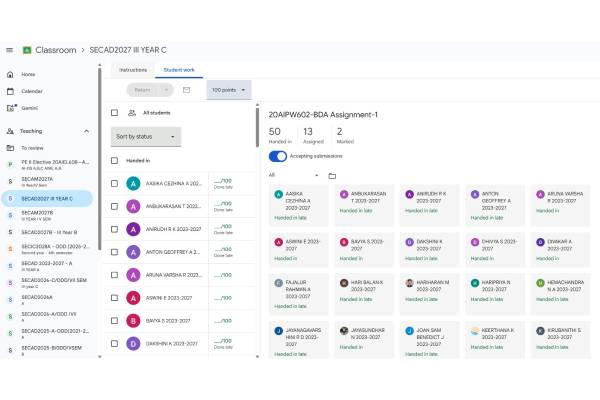
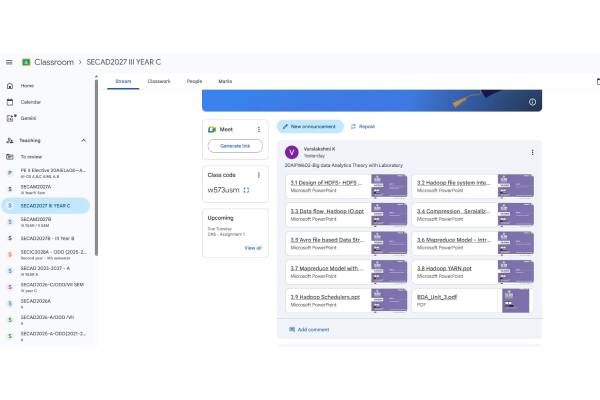
Multimedia resources, including videos, simulations, and animations, are systematically integrated to enhance conceptual understanding. Structured content delivery is facilitated through Learning Management Systems (LMS) and Google Classroom, ensuring organized and accessible learning materials. Student engagement is promoted through interactive quizzes, online assignments, and gamified learning activities, fostering active participation and improved learning outcomes in alignment with outcome-based education standards.

Real-time polling and response tools such as Kahoot, Mentimeter, SAIL, and Quizizz,Google Forms are utilized to assess student understanding. Active questioning is encouraged, fostering an environment where students critically evaluate and challenge concepts through interactive discussions.

Prepare well-structured lecture slides that combine text, visuals, and animations to enhance learning. Employ storytelling methods to make the content engaging and memorable, and include summary slides, key points, and reflection prompts to reinforce understanding.
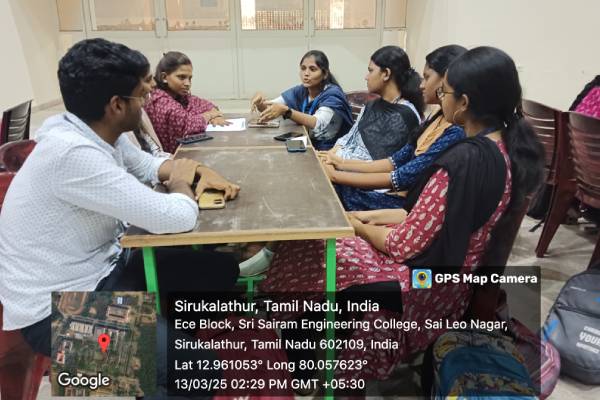
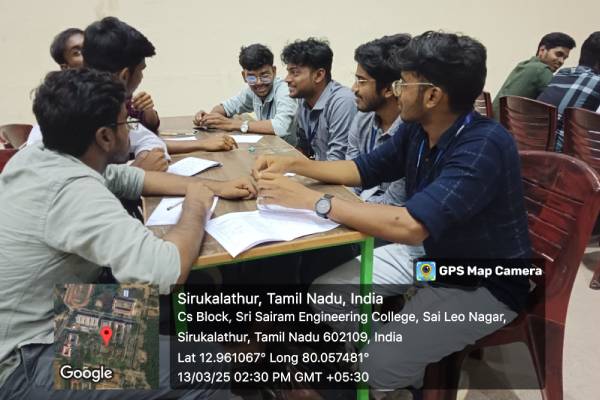
To enhance students’ communication skills, group tasks such as discussions and case analyses were assigned. The figure illustrates a student presenting a case and the active participation of students in a group discussion.

The Department organizes at least one industrial visit each semester throughout the academic year, aligned with the courses in the curriculum.

  • The Industrial Visit Coordinator coordinates with industries by collecting addresses, planning visits, and sending management-approved requests for student and faculty participation.
  • After completing the industrial visit, students must submit a report and feedback, and the collected feedback is systematically analyzed.
Place of visitDate of VisitClass Year/SemPlace of visitTotal No. of Students
108.10.2021II YEARMIT SCOE Lab56
226.10.2022III YEARNLC Neyveli17
328.04.2023II YEAR /A & BIITM Research Park90
45.06.2023IV YEARIITM Research Park56
521.09.20243rd yr B,CNLC Neyveli120
613.10.2025 to 15 10.2025II YEARAero Knotz Drones India Pvt Ltd180
708.08.20253rd a,b,cSys soft Computers106
816.02.20262nd A,BRed Back IT Solutions Pvt LTD122
918.02.20262nd C, 3rd ARed Back IT Solutions Pvt LTD122
1020.02.20263rd B,CRed Back IT Solutions Pvt LTD122

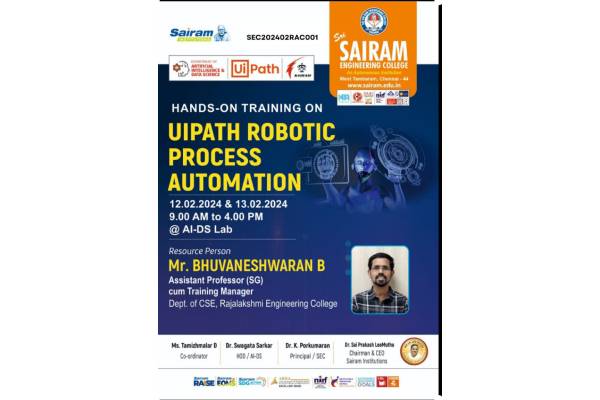
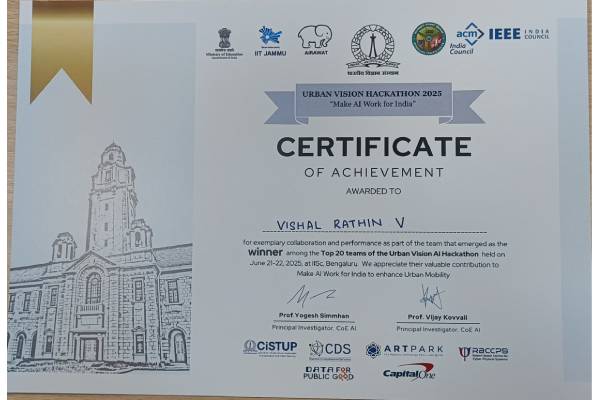
The Institute, in collaboration with professional societies and their chapters, organizes a wide range of activities such as symposia, hackathons, IEEE Xtreme programming competitions, project expos, and hands-on training programs. These initiatives encourage students to actively participate, apply theoretical knowledge, and develop solutions to real-world engineering problems.
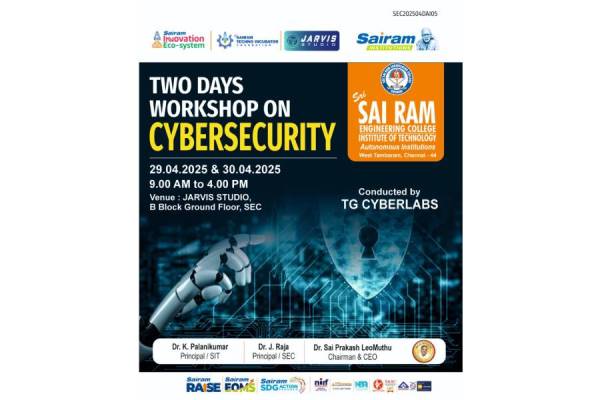
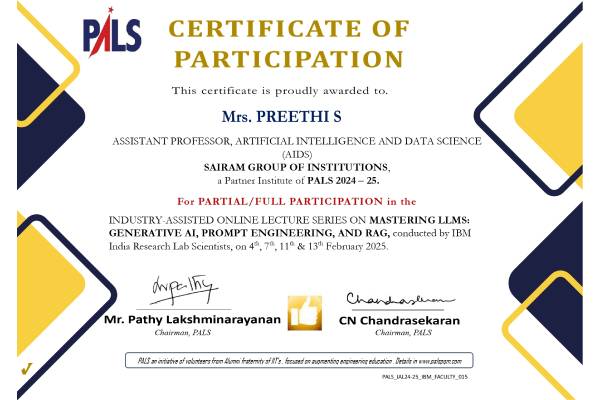
  • The Institute, in collaboration with IIT PALS and HCL Technologies, fosters creativity and critical thinking among students by facilitating their active participation in webinars, project competitions, and residential training programs organized by these organizations.
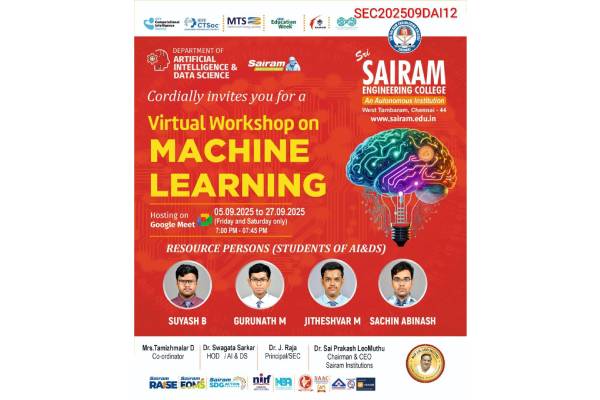
  • Workshops and guest lectures introduce emerging concepts, motivate participants to explore them independently, and demonstrate practical methodologies. They are an effective means of imparting hands-on skills, as they provide participants with opportunities to experiment with new techniques and learn in a safe and supportive environment. A sample list of workshop and guest lecturers organized has been shown in the table which is as follows: